"Enhance safety, visibility, and compliance with our high-performance pavement marking paints—engineered for durability, rapid application, and long-term performance."

Stripe Lines, Inc. offers professional-grade traffic and pavement marking paints that meet TXDOT standards, it dries quickly, and resists wear in high-traffic areas. Whether you're striping roads, parking lots, warehouses, or school zones, airports our paints ensure clear, crisp lines that last—even under extreme weather and heavy loads.

Materials

Stripe Lines, Inc. offers a variety of diverse solutions for your pavement marking needs. Paint, Thermoplastic, Epoxy, Preformed Thermoplastic, MMA, Raised Pavement Markers and so many options of these same materials for your particular solutions. 

Common Materials for Pavement Marking

Pavement marking materials are used to convey information to drivers and enhance road safety. The choice of material depends on factors such as traffic volume, surface type, weather conditions, visibility requirements, and expected durability.
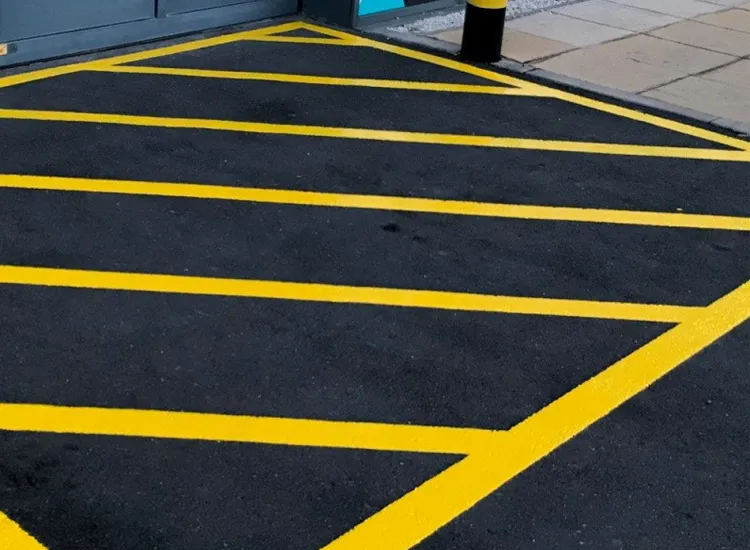
Image Alt

Type II Waterborne / Oil Base Paint

Waterborne pavement marking is a type of road marking paint that uses water as the main solvent or carrier instead of harmful organic solvents. It is a more environmentally friendly and cost-effective alternative for traffic markings.

Key points:

  • Composition: Made of water, pigments, binders (like acrylic latex), and additives; glass beads are added for reflectivity.
  • Application: Applied cold using spray equipment; dries through water evaporation.
  • Advantages: Low VOC emissions, quick drying (especially in warm weather), easy cleanup, and relatively inexpensive.
  • Limitations: Less durable than thermoplastic; performance can be affected by temperature, humidity, and traffic wear.
  • Uses: Ideal for urban streets, parking lots, and temporary or low-traffic roads.

In summary, waterborne pavement markings are eco-friendly, fast-drying paints suited for areas needing cost-effective and moderately durable traffic lines.
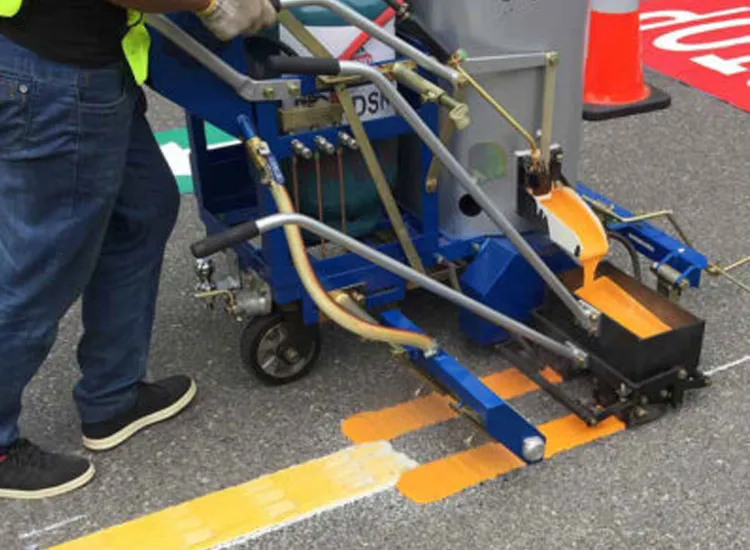
Image Alt

Type I Thermoplastic

Thermoplastic pavement marking is a durable road marking material made from a mixture of synthetic resins, glass beads, pigments, and filler materials. It is applied to road surfaces in a molten (hot) state, typically at temperatures around 180–200°C (356–392°F), and hardens quickly upon cooling to form thick, wear-resistant lines and symbols.

Key points:

  • Application: Melted and applied using specialized equipment (screed, spray, or extrusion methods).
  • Composition: Includes binder (resin), pigments for color, glass beads for reflectivity, and fillers for strength.
  • Advantages: Long-lasting, highly reflective (especially at night or in wet conditions), and resistant to wear and weathering.
  • Uses: Common for road centerlines, edge lines, crosswalks, arrows, and other traffic control markings.

Overall, thermoplastic markings provide high visibility and durability, making them a preferred choice for permanent road markings.
multipolymer

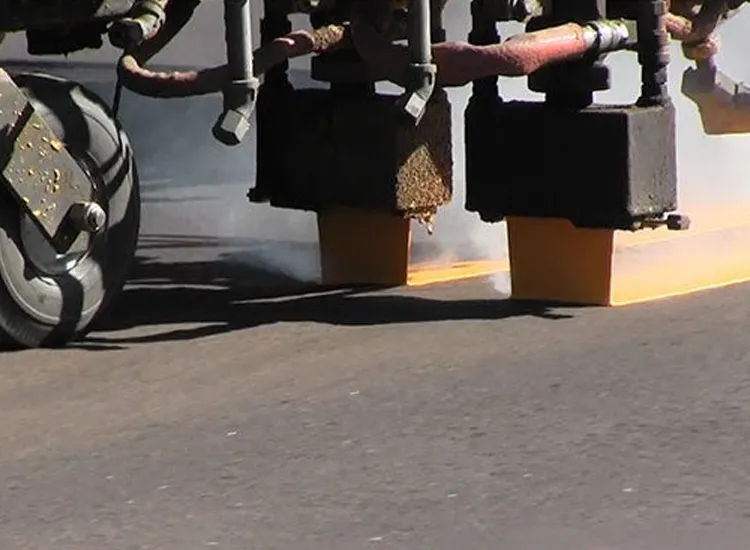
Multipolymer

Multipolymer pavement marking materials are cured to form a tough, durable line or symbol. They are designed to be highly reflective (through embedded glass beads or other retroreflective media) and resistant to wear, deformation, and weather conditions.

Key features & advantages

  • Durability: Because of their strong binder systems, multipolymer markings can withstand higher traffic volumes, harsh environments, and heavy wear better than standard waterborne paints.
  • Reflectivity: They often incorporate intermix beads or drop-on reflective beads during application to meet night-time visibility standards.
  • Application on varied surfaces: Suitable for asphalt or concrete, and for areas needing long-life markings (e.g., highways, major arterials) where repainting is costly or disruptive.
  • Performance in challenging conditions: Some products are formulated for low temperatures or rapid curing to minimize lane closure times.
  • Cost: Multipolymer systems typically cost more upfront than simple waterborne paints or standard thermoplastic paints due to material complexity and specification.
  • Application complexity: They often require proper surface prep (cleaning, priming for aged asphalt or concrete) and strict quality control during mixing and application to achieve promised performance.
  • Special equipment or conditions: Depending on the binder type (e.g., polyurea or epoxy), application may require controlled temperatures, specialized mixing and spray equipment, or specific curing time before traffic can resume.
MMA

MMA

MMA (Methyl Methacrylate) pavement marking is a durable, cold-applied road marking material known for its long service life and strong adhesion to both asphalt and concrete surfaces.

Key points:
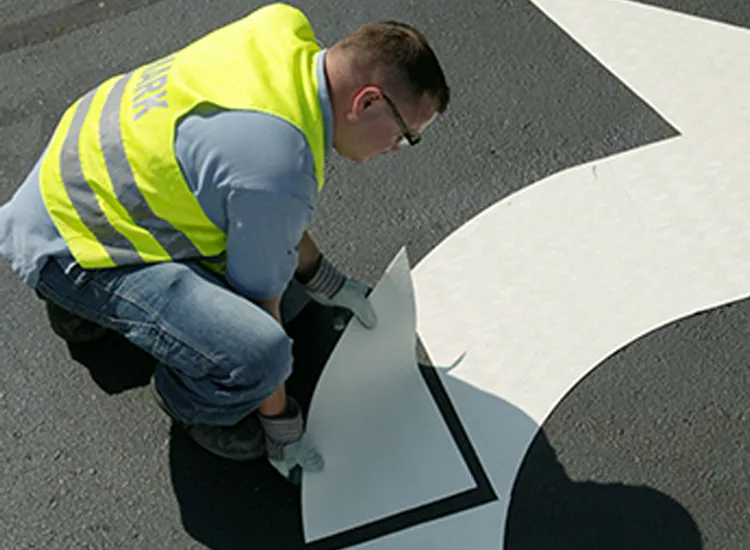
  • Composition: A two-component system consisting of a resin (methyl methacrylate) and a hardener (peroxide initiator) that chemically cures at ambient temperatures.
  • Application: Applied cold using spray or screed equipment; cures quickly (typically within 15–30 minutes) to form a tough, skid-resistant, and reflective surface.
  • Advantages:
    • Extremely durable (often lasting 5–10 years).
    • Excellent color retention and UV resistance.
    • Strong adhesion to various surfaces.
    • Maintains retroreflectivity and visibility even under wet conditions.
    • Can be applied in a wider range of temperatures than thermoplastics.
  • Limitations:
    • Higher cost than waterborne or thermoplastic markings.
    • Requires careful mixing and handling of components.
    • May have a strong odor during application.
Preformed Thermoplastic

Preformed Thermoplastic

Preformed pavement marking is a factory-made, ready-to-apply road marking material designed for quick and durable installation on asphalt or concrete surfaces.

Key points:
  • Composition: Made from pre-cut sheets or tapes of durable materials such as preformed thermoplastic or preformed polymer tape, often embedded with glass beads for reflectivity.
  • Application: Applied directly to the pavement surface—
    • Preformed thermoplastic: Heated with a torch to bond to the pavement.
    • Preformed tape: Applied with pressure-sensitive adhesive (some require primer).
  • Advantages:
    • Quick installation with minimal traffic disruption.
    • Consistent quality and thickness (factory-controlled).
    • High reflectivity and durability.
    • No need for specialized application trucks.
  • Limitations:
    • Higher material cost than standard paint.
    • Adhesion depends on surface cleanliness and temperature.
  • Uses: Common for crosswalks, symbols, legends, arrows, and temporary or permanent markings where fast, high-quality installation is needed.